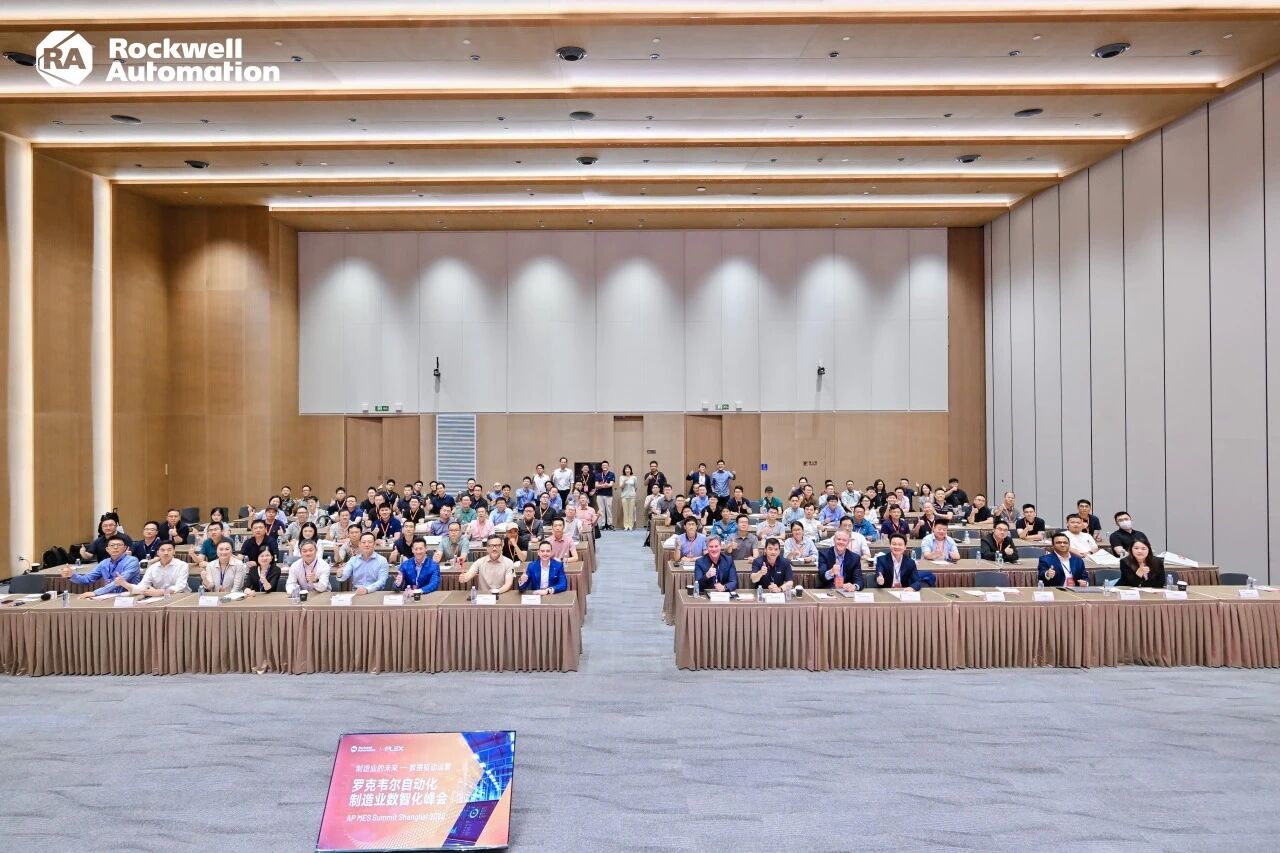

From September 16th to 17th, as one of the global leading enterprises in the fields of industrial automation, informatization and digital transformation, Rockwell Automation successfully held the Manufacturing Digitalization Summit (AP MES Summit Shanghai 2026) in Shanghai. Industry experts, representatives of advanced manufacturing enterprises, and the Rockwell global team gathered together to jointly discuss the development trends and excellent practices of manufacturing execution systems (MES), industrial data platforms, artificial intelligence (AI) applications, and digital factories.
At the beginning of the conference, Scott Wooldridge, the President of Rockwell Automation in the Asia-Pacific region, delivered a welcome speech. He stated that with the development of intelligent manufacturing technology, autonomous manufacturing is helping enterprises enhance efficiency, resilience and adaptability. The core lies in transforming the working mode by applying AI and automation technologies. This conference focuses on “The Future of Manufacturing – Data-Driven Operations”, expecting that the participants will exchange ideas and share experiences during the communication, and jointly explore new opportunities for the development of intelligent manufacturing.
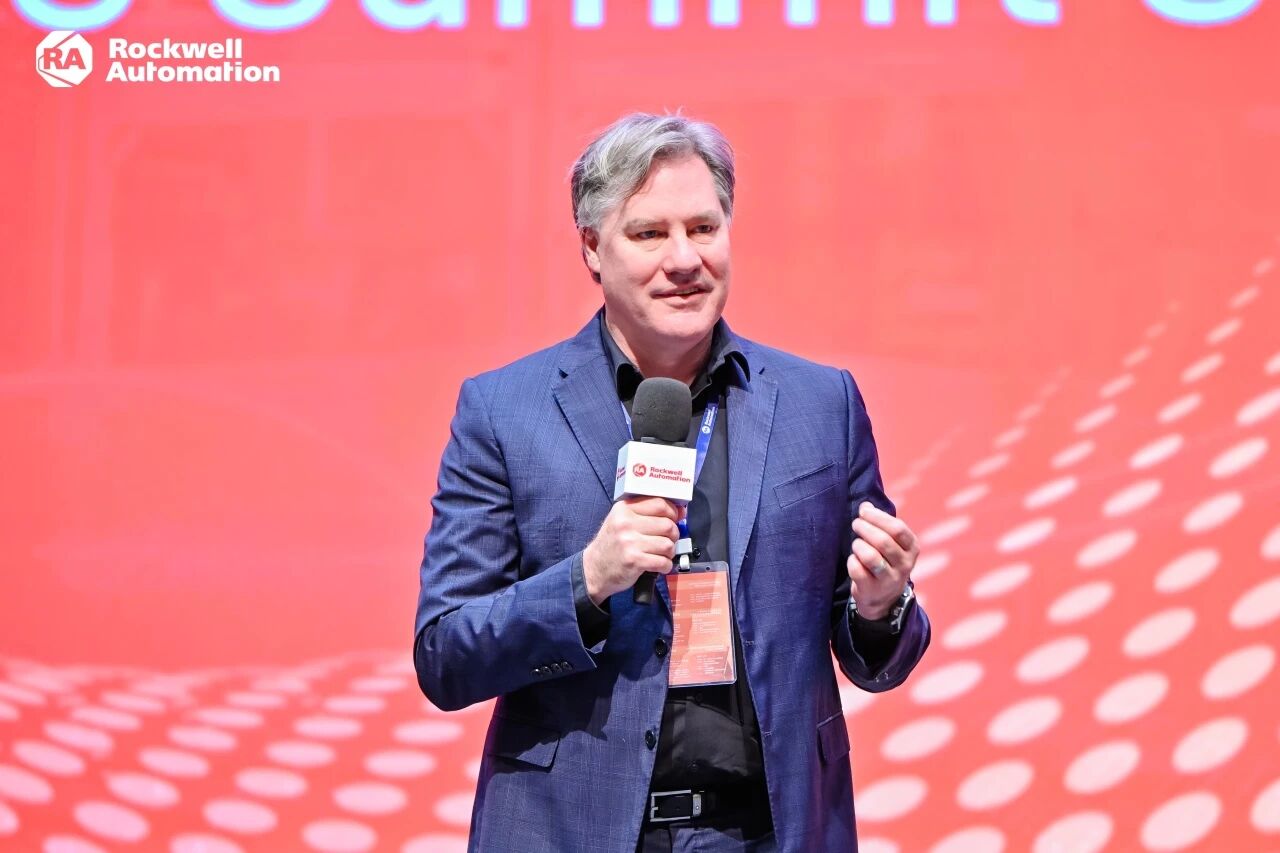
Subsequently, Shi An, the president of Rockwell Automation China, delivered a keynote speech titled “Value Integration, Global Optimization”. Shi An stated that the development and transformation of the manufacturing industry should not be limited to the optimization of a single link or a single enterprise, but should promote the synergy of the upstream and downstream of the industrial chain from a full-value chain perspective, achieving the transition from single-point optimization to global optimization. In this process, the key technical support is AIOT integration. The breakthrough of industrial AI is not a single model capability, but rather introducing AI further on the basis of the integration of IT/OT (Information Technology/Operational Technology) to form AIOT integration, allowing AI to truly enter the production site, running through the entire value chain from R&D, production, supply chain to marketing and service, and achieving data, process and decision-making synergy.
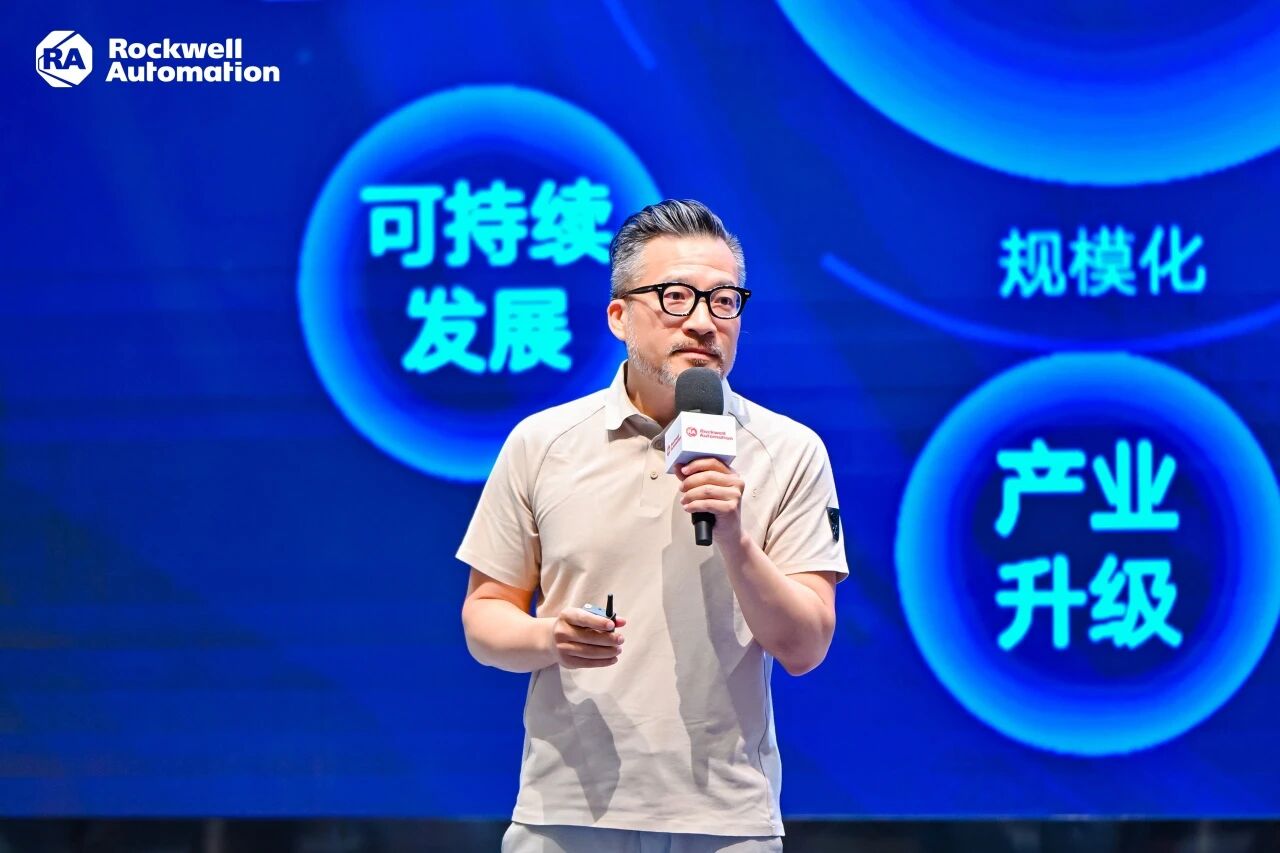
From strategic direction to technical implementation, Anthony Murphy, the Global Vice President of Rockwell Automation’s Software Business, and Xiang Li, the Director of Software and Control Products Business in Asia-Pacific, jointly delivered a themed presentation titled “The Future of Manufacturing: From Edge to Cloud, AI Empowering Superior Operations”. As manufacturing transitions from automation to autonomy, Rockwell’s vision in the global industrial control, software, and digital solution sectors is becoming increasingly clear. Both parties demonstrated how AI can be integrated into the entire process of design, operation, and maintenance, relying on an open and secure autonomous operation platform and solutions such as FactoryTalk® Optix™ and flexible MES, helping manufacturing enterprises enhance equipment overall efficiency (OEE), and accelerate their journey towards autonomous operation.
Building on this, Michael Wright, the Senior Manager of Global Software Business at Rockwell Automation, and Amit U. Wadaskar, the Regional Manager of Enterprise Software Solution Consulting Business in Asia-Pacific, presented “Data-Driven Operational Architecture Facilitating Digital Transformation Implementation”, providing a comprehensive overview of Rockwell’s digital product portfolio and the solution stack of the digital design architecture (DDA). They also stated: “In response to the trend of transitioning from automation to autonomy, enterprises need to rely on an open, scalable architecture and industrial AI to connect data, processes, and decisions, and drive closed-loop optimization through autonomous learning AI, accelerating digital transformation.”
Subsequently, in the local industry digitalization operation case-sharing session, several guests shared cases and implementation experiences of achieving excellent operations through software and multi-site execution. These practices demonstrated that relying on Rockwell’s cross-industry horizontal integration capabilities, it can help enterprises connect multiple sites, cross-regions, and even across value chains and supply chains, building a more intelligent and resilient operation system, thereby creating scalable and replicable digital enterprises.
The Rockwell Automation Manufacturing Digitalization Summit specially set up two thematic forums: Discrete/Consumer Goods and Life Sciences. 01 In the Discrete/Consumer Goods forum, with the Plex platform as the main thread, it focused on topics such as quality and supply chain compliance, group multi-factory and end-to-end operation for overseas enterprises. Through Plex’s rapid demonstration and platform implementation methodology sharing, and introducing the FactoryTalk® ResilientEdge™ cloud-edge collaboration solution, it presented the implementation path of resilience manufacturing in the consumer goods industry; at the same time, by introducing Plex MES, quality management system (QMS), Analytics, and AI Agent products and demonstrations, it comprehensively showcased the capabilities of the Plex platform in manufacturing operations and intelligent decision-making.
02 The Life Sciences forum focused on pharmaceutical manufacturing and compliance operations, covering AI and cutting-edge technologies, digital quality, biopharmaceutical MES practices, group-level multi-factory digital deployment, and OT security. Combining customer cases, it shared the transformation path from digital factory to digital quality; at the same time, it showcased the new generation of FactoryTalk PharmaSuite, edge digital platform FactoryTalk Optix, and pharmaceutical intelligent decision-making and data application practices. Through practical digital transformation analysis, it presented the exploration of the industry from equipment insight to data value.
During the conference, representatives of participating enterprises also visited the Caohejing·Rockwell Automation Net Zero Manufacturing Joint Innovation Center, experiencing scenarios such as global lean production, flexible manufacturing, and digital twins.
As the leading enterprise in the production-oriented service industry chain, Rockwell will collaborate with industry partners to continuously promote the implementation of MES, industrial data platforms and AI applications in more scenarios, helping manufacturing customers enhance their competitiveness, resilience and sustainability, and jointly usher in a new chapter of intelligent, interconnected and efficient manufacturing.