

On March 20th, TE Connectivity (referred to as “TE”) held the “Robotic Core Technology Empowering Intelligent Factory Innovation Conference” in Suzhou. Through various forms such as technical exchanges and factory visits, the event invited enterprises and ecosystem partners along the robot industry chain to discuss core technologies and implementation issues, establishing an exchange and connection platform for the industry. The discussions held at the event reflected a common background: Robots are accelerating from technical verification to engineering and large-scale implementation.
This year, the government work report has continuously proposed “artificial intelligence +” for the third consecutive year, and for the first time, it has put forward “creating a new form of intelligent economy”, promoting the acceleration of commercialization and large-scale application in key industries and fields, and also including embodied intelligence in the future industrial layout. Under the joint promotion of policies and application scenarios, the focus of the robot industry has shifted from “function realization” to “stable operation and replicable delivery under real working conditions”. With the continuous increase in the complexity of robot systems, higher requirements have been put forward for stable connection and reliable transmission in all aspects from perception, decision-making to execution. Although connection technology is often regarded as a basic link, it directly affects the stability and consistency of the entire machine under real working conditions. In this context, TE not only participates in the construction of robot systems with interconnection solutions, but also builds communication platforms to promote more efficient connection and collaboration between upstream and downstream parties.
Interconnection solution provider
From components to system architecture, engineering-oriented interconnection design
With the continuous emergence of new forms such as collaborative robots, humanoid robots, and embodied intelligent robots, the complexity of robot systems has rapidly increased. For embodied intelligence, connection is not just about “connecting”, but also requires completing the interconnection design and engineering implementation at the system level within a limited space, surrounding key links such as the entire machine, joint modules, communication and high-speed data. It also needs to maintain continuous stability in the long-term movement environment with high vibration, dense wiring and high-speed data transmission. This means that the connection solution needs to simultaneously address multiple engineering constraints: space limitations for miniaturization and lightweighting, vibration and impact resistance under dynamic conditions, and the requirement for signal stability of high-speed data links.
In practical applications, the key challenge of the connection solution often lies not in achieving full performance in a single metric, but rather in finding a replicable balance among space, reliability, and long-term motion stability. For instance, how can the contradiction between “space constraints” and “reliability requirements” be resolved? Taking TE MINI I/O as an example, it is approximately 75% smaller in size compared to traditional RJ45, and its vibration resistance has increased by more than three times. It can stably transmit Ethernet data in environments with limited space and vibration shocks, making it more suitable for the long-term stable operation requirements of embodied intelligent robots.
In addition to the performance improvement of individual components, more and more robot projects require overall planning of the interconnection architecture at the system level. As the number of functional modules increases and the internal data links become denser, the number of high-speed data interfaces that need to be deployed within the entire system is also increasing. In humanoid robots, multiple high-speed interfaces are typically required at the head or joint positions to connect key modules such as IMUs and dual-camera systems. These interfaces not only need to support high-speed data transmission but also must be able to withstand mechanical stresses such as vibration, impact, and cable pulling in a continuously moving environment for a long time.
In project implementation, this contradiction can be specifically manifested in the selection of the Type-C interface: The consumer-grade option is unable to meet the reliability requirements under high vibration, impact, and stress pulling; while the vehicle-grade or screw-locking solutions have better performance but are too large in size, making it difficult to be deployed in extreme spaces such as the head and joints. To address this challenge, TE has developed a miniaturized snap-lock Type-C connector for humanoid robots. Its size is significantly smaller than the vehicle-grade or screw-locking solutions, and through the snap-lock structure, it enhances the anti-vibration, anti-impact, and anti-pulling capabilities, achieving stable high-speed connections in compact spaces.
Industrial ecosystem connector
From technical collaboration to ecological co-construction, enhancing the efficiency of aligning the industrial chain
The robot system encompasses multiple aspects such as sensors, drive systems, control algorithms, software platforms, and overall machine manufacturing. For the industry to achieve large-scale application, in addition to single-point technological breakthroughs, it is also necessary for all links in the industrial chain to reach consensus on aspects such as standard understanding, working condition definition, interface coordination, and verification methods, in order to achieve more efficient collaboration and iteration.
On March 20th, at the “Robotic Core Technology Empowering Intelligent Factory Innovation Conference”, TE, as one of the organizers, brought together multiple robot enterprises and industry partners. Through means such as technology sharing, case exchanges, and factory visits, it enabled participants along the entire industrial chain to have face-to-face communication. By placing the experiences and demands scattered in different links in the same context, it helped all parties align more quickly and reduce the communication costs from “individual optimization” to “system evolution”.
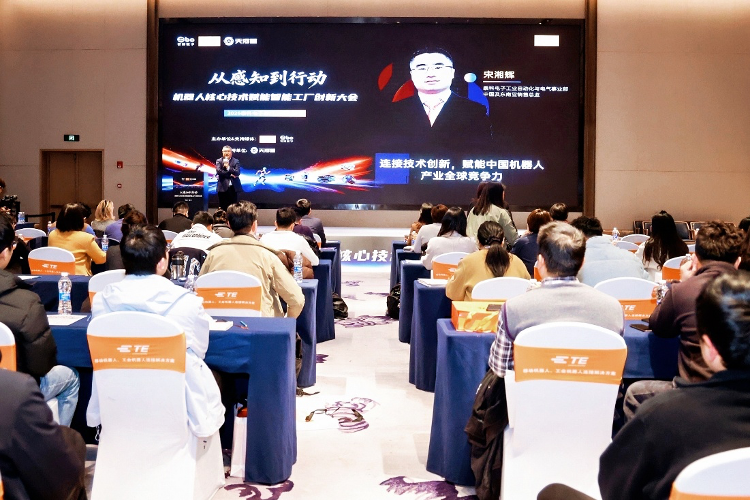
On March 20th, at the “Conference on Enabling Intelligent Factories with Core Robot Technologies” event
Meanwhile, for different application scenarios at different levels of maturity, TE has also established clear collaboration methods: For relatively mature scenarios, standardized connection solutions are adopted to support more efficient selection and large-scale deployment; for rapidly evolving emerging fields, it participates earlier in the product development stage, through pre-incremental collaboration and joint development, to transform new requirements into implementable products and solutions in the iterative process.
Localized manufacturing and engineering system
Transform the experience into replicable delivery capabilities.
Collaboration and implementation cannot be achieved without the support of the manufacturing and engineering systems. With nearly 40 years of deep involvement in China, TE has relied on its localized strategy, which includes local manufacturing, local talent, local R&D and design, local supply chain, and local customers, in order to better adapt to the changes in customer structure, wiring methods, and the iterative pace of application scenarios. Taking the Suzhou factory as an example, TE combines the global unified high-standard manufacturing system with the demand for rapid response in the Chinese market, forming a closed loop of collaboration between R&D, engineering verification, and manufacturing.
For connectors, whether they can achieve long-term dynamic lifespan depends crucially on whether the engineering design and verification can achieve a rapid closed-loop process, and whether the capability can be stably replicated in mass production. By consolidating engineering experience into manufacturing and verification systems and combining with local supply chain collaboration, we can provide more certain delivery schedules and consistency guarantees as customers move from prototypes to mass production.
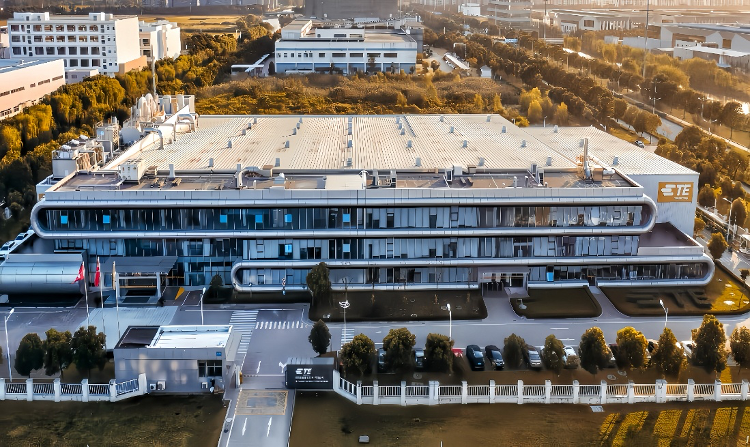
TE Industrial Automation and Electrical Division, Suzhou Factory
From single-point performance to system collaboration, the connotation of connection in the robot industry is expanding: it not only relates to the stable operation of equipment under complex conditions, but also affects the alignment efficiency among different links in the industrial chain. The exchanges and connections represented by this Suzhou conference have also provided a reference sample for the industry to explore collaboration under real demands and engineering constraints.