

On the evening of March 9 (Beijing Time), ABB Robotics—a global leader in robotics—announced a deep collaboration with NVIDIA to fully integrate the NVIDIA Omniverse platform into its ABB RobotStudio® software. Leveraging an accuracy level of up to 99%, this initiative bridges the technical gap between virtual training and real-world deployment, thereby driving the large-scale adoption of industrial-grade physical AI across the global manufacturing sector.
The all-new RobotStudio HyperReality solution, jointly developed by the two companies, is scheduled for official launch in the second half of 2026. This move is set to fundamentally reshape how manufacturers scale up their production lines, empowering enterprises to reduce costs by up to 40% and cut time-to-market by 50%.
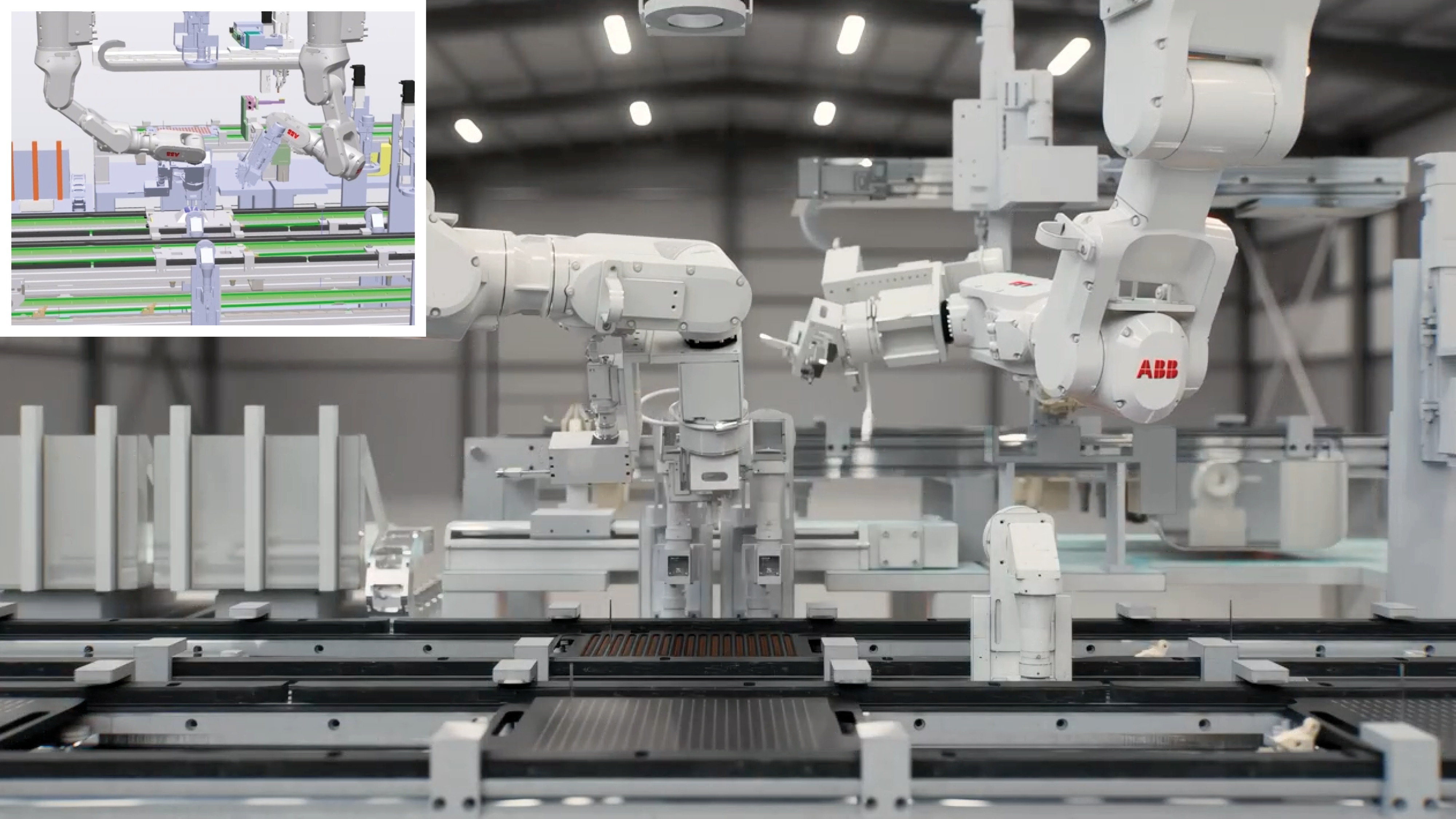
At the core of this collaboration lies the deep integration of the strengths of ABB Robotics’ RobotStudio software—which unifies programming, design, and simulation—with the high-fidelity physics simulation capabilities of NVIDIA Omniverse. This fusion effectively bridges the long-standing “sim-to-real” gap that has challenged the manufacturing industry. Developers can now conduct simulation tests on robots within a digital twin environment and generate synthetic data to train physics-informed AI models, enabling enterprises of all sizes to deploy AI-driven robotics across diverse industrial production workflows.
Marc Segura, President of ABB Robotics, stated that by leveraging NVIDIA’s accelerated computing and simulation technologies, the two companies have completely eliminated the final barrier to the global, large-scale deployment of industrial physics-informed AI. With a legacy spanning over 50 years in intelligent industrial automation, ABB Robotics has consistently remained at the forefront of the industry—from pioneering the first generation of all-electric industrial robots and driving advancements in digital twin simulation via RobotStudio, to strategically expanding into the emerging field of autonomous, multi-functional mobile robots. This latest collaboration with NVIDIA marks a pivotal moment, officially ushering physics-informed AI into the phase of industrial-scale application.
Deepu Talla, Vice President of Robotics and Edge AI at NVIDIA, also noted that the industrial sector is in urgent need of high-fidelity physics simulation technologies to facilitate the seamless transition of AI-driven robots from virtual training to real-world, scaled deployment. Integrating the Omniverse library into RobotStudio endows ABB’s unique virtual controller technology with advanced simulation capabilities and accelerated computing support, thereby significantly boosting the efficiency with which manufacturers of all sizes can bring complex products to market.
For years, the “sim-to-real” gap—stemming from discrepancies between simulation environments and real-world scenarios regarding factors such as lighting, material properties, and ambient conditions—has constrained manufacturers’ ability to develop advanced production processes within the virtual realm. ABB’s latest technological innovation serves as the key to breaking down this barrier: as the only robotics manufacturer whose virtual controllers run on the exact same firmware as their physical hardware, ABB has achieved an exceptional level of fidelity between simulated and real-world performance. Furthermore, by combining this capability with its “Absolute Accuracy” technology—which reduces robot positioning errors from a typical 8–15 millimeters to approximately 0.5 millimeters—ABB has achieved industry-leading precision in both virtual and physical environments, perfectly meeting the rigorous demands of high-precision industrial applications. With the integration of NVIDIA Omniverse libraries, RobotStudio now possesses unprecedented capabilities in robot simulation and synthetic data generation, enabling intelligent robots to bridge the “simulation-to-reality” gap with 99% accuracy. This innovation allows manufacturers to design, test, and optimize production lines entirely within a virtual environment—cutting line setup and commissioning times by 80% while eliminating the need for physical prototyping. This not only further reduces costs but also significantly accelerates the R&D and production processes for complex products, particularly within the consumer electronics sector. Furthermore, ABB Robotics is currently evaluating the feasibility of integrating the NVIDIA Jetson edge computing platform into its OmniCore controllers, aiming to enable real-time AI inference at the edge across its entire robot portfolio. This collaboration marks a deepening of the long-standing technological partnership between the two companies, which has previously seen the integration of NVIDIA Jetson with ABB’s VSLAM-enabled autonomous mobile robots, as well as the joint development of AI data centers at the gigawatt scale.
Currently, select benchmark customers are already piloting the technical capabilities of RobotStudio HyperReality. Following its official launch later this year, this solution will be made available to ABB’s global community of 60,000 RobotStudio users, serving industrial clients of all sizes across a diverse range of industry applications. Among these early adopters, Foxconn—the world’s largest electronics contract manufacturer—has taken the lead in piloting the first joint use case within its consumer electronics assembly operations. Consumer electronics assembly demands extremely high precision, requiring production processes to be tailored to the specific requirements of different product models. The assembly of intricate metal structures, in particular, necessitates precise pick-and-place operations and assembly controls—tasks that typically consume vast amounts of commissioning time and engineering resources. By leveraging RobotStudio HyperReality, Foxconn’s assembly robots can undergo training within a virtual environment. Through the use of synthetic data, these robots can optimize processes for a wide variety of real-world production scenarios, subsequently deploying to the actual production line with 99% accuracy. This approach drastically reduces the time and costs associated with physical training and testing, thereby accelerating the time-to-market for consumer electronics products.
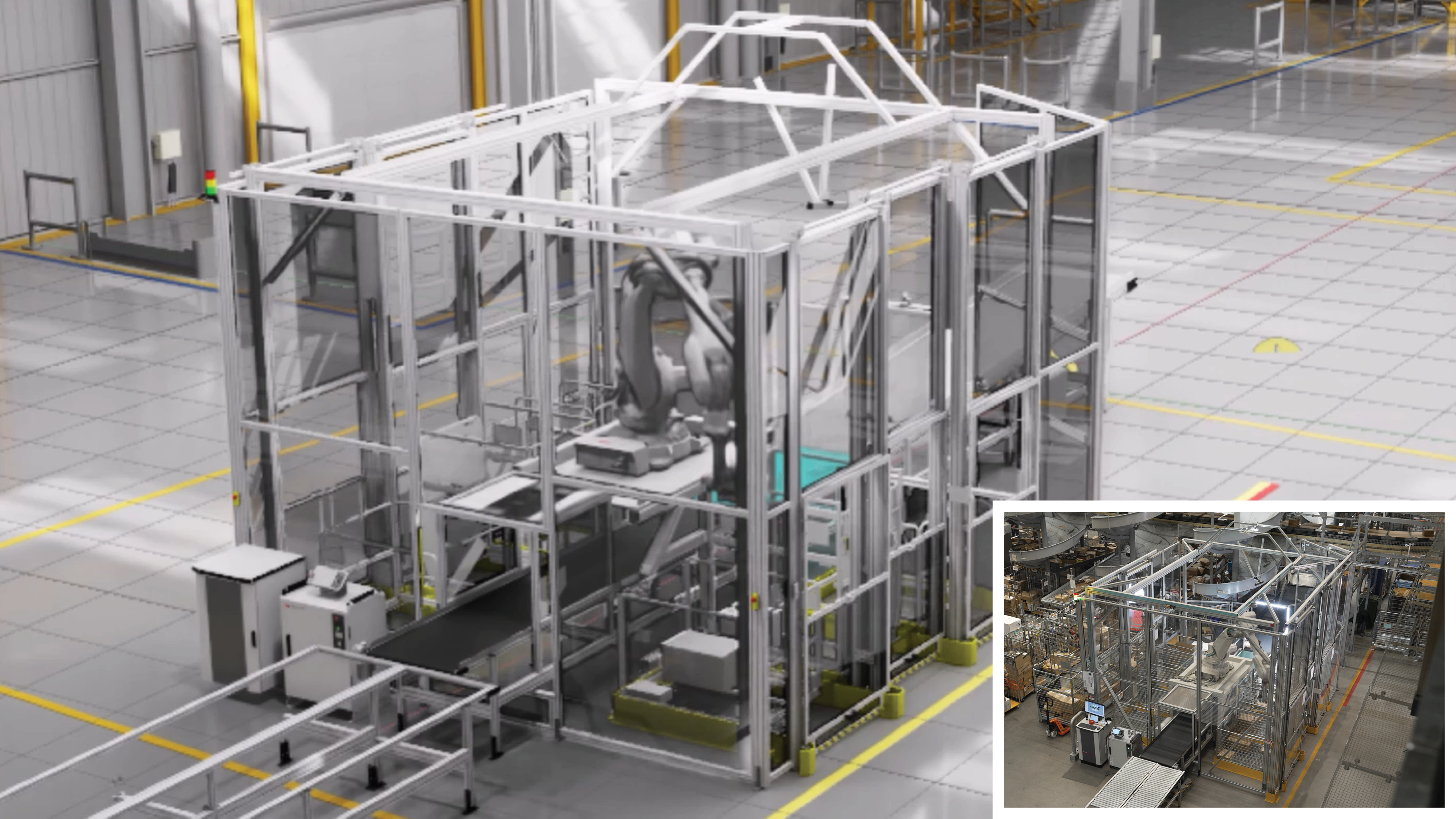
Dr. Zhe Shi, Chief Digital Officer at Foxconn, stated that precision lies at the core of consumer electronics manufacturing. Previously, simulation and digital twin technologies were unable to achieve such high levels of accuracy and fidelity; however, the collaboration between ABB and NVIDIA has opened up entirely new possibilities. Advanced AI inference and perception capabilities have enabled parallel engineering, empowering enterprises to achieve superior designs, accelerate production ramp-ups, and facilitate more agile product iterations.
WORKR, a robotics solutions provider based in California, USA, has also emerged as a key adopter of this technology. The company is currently rolling it out to small and medium-sized manufacturers across the United States, helping to address the severe labor shortages plaguing the local manufacturing sector. At the NVIDIA GTC conference—to be held in San Jose, USA, from March 16 to 19, 2026—WORKR will showcase an AI-driven robotics system built upon ABB’s technology. This system is trained using synthetic data generated via the NVIDIA Omniverse library, enabling operators to deploy it without requiring any programming skills. By integrating ABB’s industrial-grade robots with its proprietary WorkrCore™ AI platform, WORKR has created a robotic workforce capable of learning new tasks in a matter of minutes, comprehensively meeting the production needs of manufacturers of all sizes.
Ken Macken, Founder and CEO of WORKR, emphasized that the core objective of this tripartite collaboration is the immediate, real-world implementation of industrial AI. As has now been proven, advanced automation technology is not the exclusive domain of large corporations; rather, it can generate significant value for manufacturers of every scale.
As a global leader in the field of robotics, ABB Robotics is the only company in the industry to offer a comprehensive, AI-driven product portfolio spanning industrial robots, collaborative robots, and autonomous mobile robots. Leveraging high-value software to facilitate the design and coordinated orchestration of its entire product ecosystem, ABB Robotics empowers enterprises of all sizes across diverse sectors—including automotive, electronics, and logistics—to enhance their resilience, agility, and production efficiency. Currently, ABB Robotics is spearheading the research, development, and commercialization of a new generation of autonomous, multi-functional robotics technologies, collaborating with a global ecosystem of innovation partners to drive the advancement of high-performance industrial-grade hardware and intelligent software.