
On June 5th, Yideng held the “Shimo·Qi Zhi” 2026 Strategy and New Product Global Launch Conference in Suzhou High-tech Zone. They officially announced their new corporate mission and vision – “Leading the intelligent industrial sector and jointly building a zero-carbon future”, and for the first time disclosed the overall plan for the implementation of the “1-4-3” strategy.
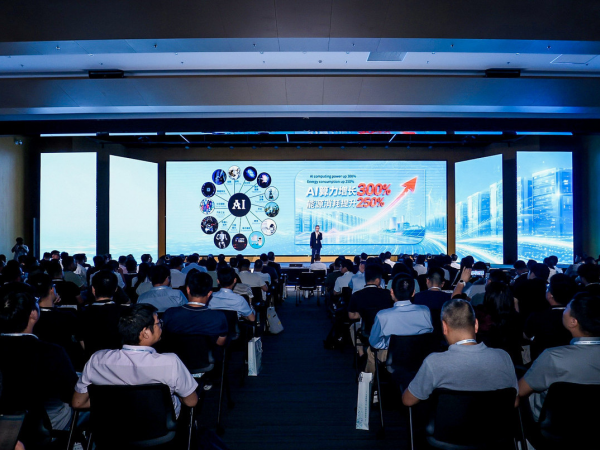
The scene of the conference (provided by the Media Federation Center of Suzhou High-tech Zone)
Huang Shenli, the chairman of Yidexin Technology, stated that technological progress has continuously enhanced social production efficiency, but it has also brought about challenges such as energy consumption and climate change. With the explosive development of artificial intelligence, the demand for computing power continues to increase, and the importance of energy efficiency has become even more prominent.
Yingteng has established “Smart Industry” and “Zero-Carbon Future” as the long-term direction for its business development, refreshing its mission and vision – Leading Smart Industry and Building Zero-Carbon Future. It hopes to promote the improvement of industrial production efficiency and the optimization of energy utilization through technological innovation, achieving the coordinated progress of economic development and green transformation.
Here, “leading” represents continuous innovation and forward-looking planning; “co-construction” embodies the concept of open collaboration. In the future, Yingteng will focus on four major industrial directions: industrial automation, network energy, photovoltaic energy storage, and new energy power. It will promote the decarbonization of energy, the efficiency of energy use, and the electrification process.
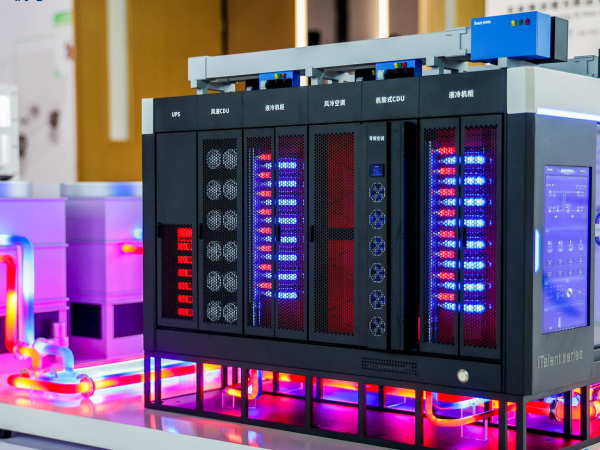
The scene of the conference (provided by the Media Federation Center of Suzhou High-tech Zone)
Tian Huanchen, the president of Yidex Power, explained: “We are not competing in terms of individual products, but rather building a capability system for future industrial sites.” The essence of this transformation is a shift from being a device supplier to becoming a capability system provider.
To ensure the successful implementation of the strategy, Yidenteng has continuously increased its investment in research and development and is advancing the layout of key core technologies in a phased manner.
In the future, Yidwentin plans to further optimize its global R&D, manufacturing, supply chain, marketing and service network layout. Its business will cover more than 160 countries and regions, and it will collaborate with over 1,000 channel partners to achieve high-quality growth in the overseas market.
The Suzhou and Zhongshan industrial parks of Yingteng have achieved high proportion of green electricity consumption through the coordinated deployment of four major industries, reducing carbon emissions by hundreds of tons annually. By the end of this year, the Suzhou Zero-Carbon Park will be officially completed, marking a milestone in moving from strategic conception to large-scale replication.
In terms of ecological collaboration, Yidianteng will jointly build a panoramic value network with global partners: technical partners will collaborate and conduct joint research; standards will be jointly established; distribution partners will jointly expand in different regions and jointly build the brand; integration partners will jointly create solutions; service partners will jointly ensure training. The essence of the ecosystem is complementary capabilities, value creation, and shared benefits.
Yingteng has clearly defined its strategic direction with the main line of “intelligence + zero carbon”, and has constructed systematic implementation capabilities through the 1-4-3 strategic map. It also supports this with measurable resource investment, hard indicators of implemented products, as well as the already-proven cross-industry collaboration capabilities and the upcoming zero-carbon park model. This vividly demonstrates how an outstanding Chinese manufacturing enterprise responds to the country’s “new quality productive forces” call, achieving industrial advancement in the era of intelligence and zero carbon.