

On the evening of March 9th, Beijing time, the world’s leading robot company ABB Robotics announced a deep cooperation with NVIDIA, integrating NVIDIA Omniverse library into ABB RobotStudio® software. With an accuracy rate of up to 99%, this move breaks through the technical barriers between virtual training and real deployment, promoting the large-scale implementation of industrial-level physical AI in the global manufacturing industry.
The brand-new RobotStudio HyperReality solution jointly developed by both parties will be officially launched in the second half of 2026. This move will completely revolutionize the large-scale deployment model of manufacturers’ production lines, helping enterprises reduce costs by up to 40% and shorten the product launch time by 50%.
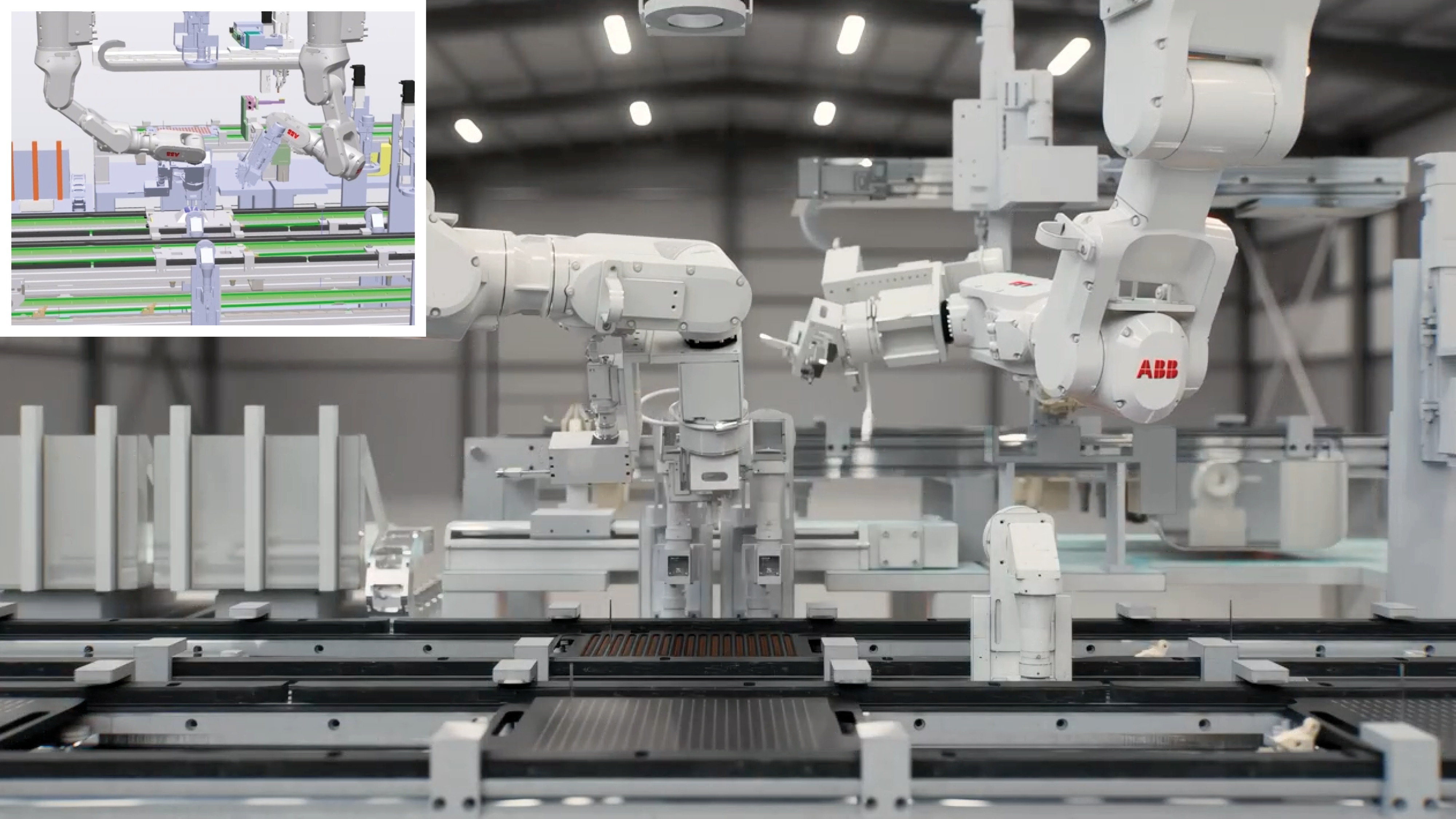
The core of this collaboration is to integrate the advantages of RobotStudio, a software suite from ABB that combines programming, design, and simulation, with the high-precision physical simulation capabilities of Nvidia Omniverse’s library. This has overcome the long-standing “sim-to-real” technology gap in the manufacturing industry. Developers can conduct simulation tests on robots in a digital twin environment and generate synthetic data to train physical AI models. This enables enterprises of all sizes to apply AI-driven robot technology to diverse industrial production processes.
Marc Segura, the president of ABB Robotics, stated that by leveraging NVIDIA’s accelerated computing and simulation technologies, the two parties have completely removed the last barrier for the global and large-scale implementation of industrial physical AI. With a 50-year history of intelligent industrial automation, ABB Robotics has always been at the forefront of the industry, from pioneering the first generation of all-electric industrial robots, to promoting the upgrade of digital twin simulation technology through RobotStudio, and then to laying out the new field of autonomous multi-functional mobile robots. This collaboration with NVIDIA has officially brought physical AI into the stage of industrial large-scale application.
Deepu Talla, the Vice President of NVIDIA Robotics and Edge AI, also pointed out that the industrial sector urgently needs high-precision physical simulation technology to achieve the connection between AI-driven robots’ virtual training and their large-scale deployment in reality. Integrating the Omniverse library into RobotStudio has enabled ABB’s unique virtual controller technology to possess advanced simulation capabilities and accelerated computing support, significantly enhancing the efficiency of manufacturers of all scales in launching complex products.
For a long time, the “simulation-to-reality” gap caused by differences in lighting, materials, and environment between the simulation environment and the real scene has limited manufacturers’ ability to develop advanced production processes in the virtual world. However, ABB’s latest technological innovation has become the key to breaking this barrier: As the only robot manufacturer that enables virtual controllers to run the same firmware as the hardware, ABB has achieved a high degree of compatibility between simulation and reality; combined with its absolute precision technology, the positioning error of the robot has been reduced from 8-15 millimeters to around 0.5 millimeters, achieving industry-leading high precision in both the virtual and physical environments, and perfectly meeting the requirements of high-precision industrial applications.
After integrating NVIDIA Omniverse libraries, RobotStudio has acquired unprecedented capabilities in robot simulation and synthetic data generation, enabling intelligent robots to bridge the “simulation-to-reality” gap with 99% accuracy. This innovation allows manufacturers to complete the design, testing, and optimization of production lines in a virtual environment, reducing the time for line setup and debugging by 80%, while eliminating the need for physical prototype production, further reducing costs and significantly accelerating the development and production of complex products such as consumer electronics. Additionally, ABB robots are evaluating the feasibility of integrating NVIDIA Jetson’s edge computing platform into its Omnicore controller, with the aim of enabling real-time AI inference at the edge for all of its robots. This collaboration is a deepening of the long-term technical collaboration between the two parties. Previously, they have achieved the integration of NVIDIA Jetson with ABB’s VSLAM autonomous mobile robots and jointly developed a gigawatt-level AI data center.
Currently, some benchmark customers have already tested the technical capabilities of RobotStudio HyperReality. After the solution is officially released in the second half of the year, it will be made available to 60,000 RobotStudio users worldwide of ABB, covering industrial customers of all sizes and diverse industry application scenarios. Among them, the world’s largest electronics contract manufacturer Foxconn has already conducted the first joint use case pilot in the consumer electronics assembly process. The assembly of consumer electronics requires extremely high precision. Different product models need to be adapted to different production processes, and the assembly of precise metal structures requires precise picking, placing, and assembly control, which often consume a lot of debugging time and engineering resources. With the help of RobotStudio HyperReality, Foxconn’s assembly robots can complete training in a virtual environment, optimize multiple real production scenarios through synthesized data, and then place products on the production line with 99% accuracy, significantly reducing the time and cost of physical training and testing, and accelerating the launch of consumer electronic products.
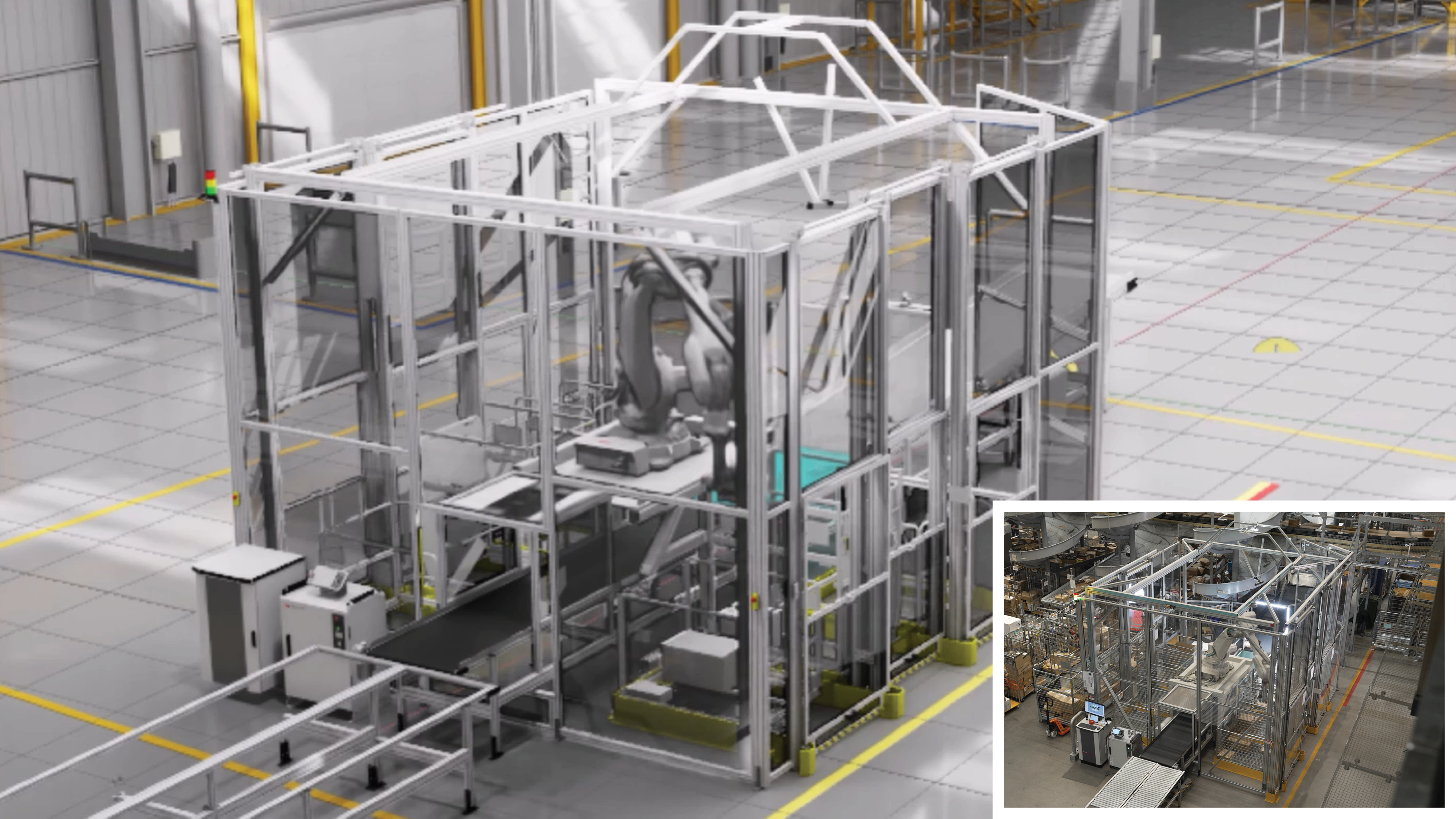
Dr. Shi Zhe, the Chief Digital Officer of Foxconn, stated that precision is the core of consumer electronics manufacturing. Previously, simulation and digital twin technologies were unable to achieve such high accuracy and fidelity. However, the collaboration between ABB and NVIDIA has brought about new possibilities. The advanced AI inference and perception capabilities have enabled concurrent engineering, helping enterprises achieve better designs, faster capacity ramp-up, and more flexible product iterations.
The robot solution enterprise WORKR from California, USA, has also become an important adopter of this technology. It is promoting it to various small and medium-sized manufacturers in the United States, helping to solve the severe labor shortage problem in the local manufacturing industry. At the NVIDIA GTC conference held in San Jose, USA from March 16th to 19th, 2026, WORKR will showcase an AI-driven robot system based on ABB technology – this system is trained using synthetic data generated by NVIDIA Omniverse library, and operators can deploy it without mastering programming skills. WORKR combines ABB industrial robots with its self-developed WorkrCore™ AI platform to create robot labor forces that can learn new tasks in a few minutes and fully adapt to the production needs of manufacturers of all sizes.
Ken Macken, the founder and CEO of WORKR, emphasized that the core of this tripartite collaboration is to enable industrial AI to be implemented immediately. It has been proven that advanced automation technology is not exclusive to large enterprises; instead, it can create value for manufacturers of all sizes.
As a leading enterprise in the global robotics field, ABB robots is the only company in the industry that possesses a complete range of AI-driven product portfolios covering industrial robots, collaborative robots, and autonomous mobile robots. By leveraging high-value software, it achieves the design and collaborative scheduling of the entire product system, empowering various industries and enterprises of all sizes, including automotive, electronics, and logistics, to enhance their resilience, flexibility, and production efficiency. Currently, ABB robots is leading the research and commercialization of the next-generation autonomous multi-functional robot technology, collaborating with global innovation ecosystem partners to promote the upgrade of industrial-grade high-performance hardware and intelligent software.